

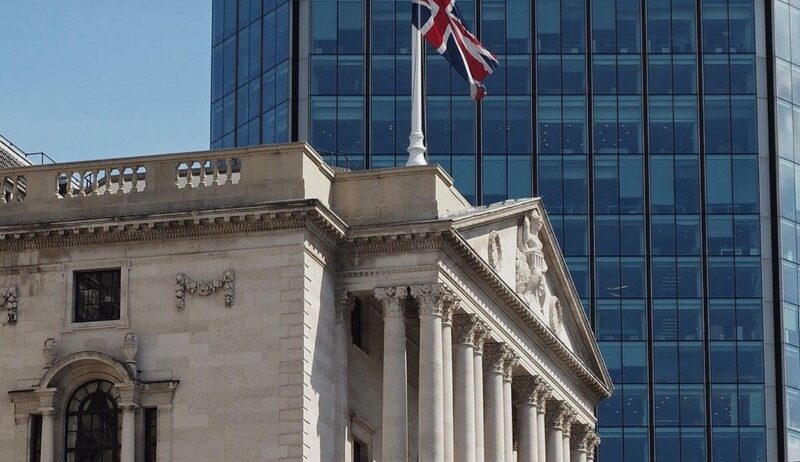
The Bank of England has raised the base rate by 0.25 percentage points to 4%, as the ongoing conflict in the Middle East continues to drive up global energy prices and increase inflationary pressures.
The decision marks the first increase in interest rates in more than three years. The Monetary Policy Committee (MPC) voted by a majority of 8–1 to increase the Bank Rate to 4%, with one member voting for a larger increase of 0.5 percentage points, to 4.25%.
The bank said the conflict had disrupted the transportation and supply of energy, pushing up prices and increasing household costs, including motor fuel and utility bills.
The Consumer Prices Index (CPI) rose to 3.5% in September, and the bank expects it to increase further to around 5% by the middle of 2027 as higher energy prices feed through the economy.
The bank said there was currently limited evidence of higher energy costs having a wider impact on core inflation and wage growth. However, it warned that businesses could eventually pass on rising operating costs to consumers, particularly if energy prices remain elevated.
The BoE said: “There is now enough inflationary pressure in the pipeline caused by the rise in energy prices that an increase in Bank Rate is warranted.”
It added that monetary tightening should help limit the extent to which higher energy costs feed into prices across the wider economy.
The bank also noted that GDP growth had been more resilient and stronger than expected, adding to the risk that higher energy prices could affect secondary price effects.
The MPC added its decision should not be interpreted as the beginning of an inevitable sequence of a tightening cycle. However, it warned that further increases could follow if the conflict remains unresolved and energy prices continue to put pressure on inflation.
The committee said it would assess the economic outlook at each meeting, monitoring wage growth, corporate pricing power and the impact of higher energy costs to ensure inflation returns sustainably to its 2% target.
Andrew Bailey, governor of the Bank of England, said: “There is now enough inflationary pressure in the pipeline caused by the rise in energy prices that an increase in Bank Rate is warranted.
“Today’s increase shouldn’t be seen as the first in an inevitable long sequence of hikes. But, unless the conflict in the Middle East is resolved, neither does it seem likely to be the last increase. The MPC will judge the outlook at each meeting, responding as necessary to bring inflation sustainably back to our 2% target.”